









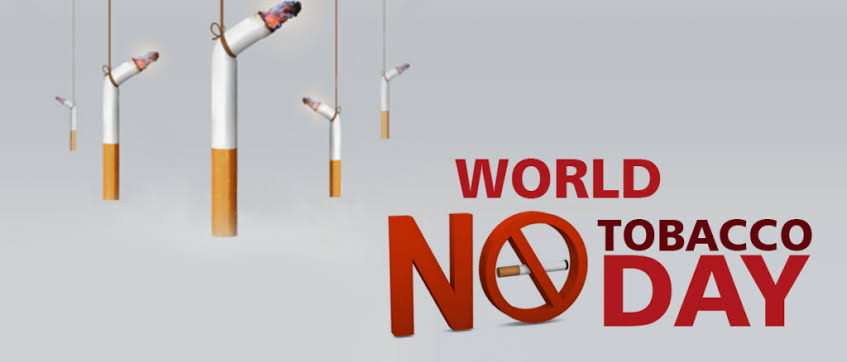
World No Tobacco Day 2021: Smoking and Cancer Risk
By Dr. Vikas Roshan
Consultant – Radiation Oncology
American Oncology Institute, Jammu
There is a well-known song called “Har fikr ko dhuen mein” and we know the reality is different and not very safe for physical and mental health.
May 31 is observed as Worlds No Tobacco Day and there is no doubt that Tobacco became one of the biggest global threats and a leading cause of death and disability in the world.
Cancer is caused by the body’s cells going rogue and attacking the body. It defies immunity and invades the organs and leads to various complications. The body’s defense system tries to contain it; most of the time, it succeeds, but it can also lead to cancer formation and dissemination.
Cancers are usually named as per their organ of origin and presented as:
· Thickening, a swelling, lump in any parts of the body
· Hoarseness of voice,
· Blood with vomiting or stools
· Blood with cough,
· Difficulty in eating,
· Loss of appetite, fatigue
· Sudden weight gain and weight loss
Here are few risk factors caused by smoking:
· Smoking acts as a direct irritant to the body cells from the lips to cells of lung alveoli to cell lining of the food pipe.
· Smoking also affects the DNA of the cell, this DNA is like an instruction manual for cell division and cell death. Cell follows all the rules written in this instruction manual. Smoking leads to a change in the instructions and leads to mutations in normal. These lead to cancer formation.
· Smoke also affects the immune system and weaken it and leaves the body unable to resist infection and cancer invasion
Everyone knows smoking causes cancer but it becomes quite difficult to leave it for good because the substance Nicotine that is excitatory for the brain. Every time person smokes, it leads to euphoria but slowly this effect wears off and smokers increase the frequency to get the same effect.
But an important point to note here is that with nicotine, other harmful chemical substances also get inhaled which leads to cancer. Multiple cancers are associated with smoking like head and neck cancer, lung cancer, bladder, cervix, kidney, colorectal, liver, etc
Treatment for cancers is getting better but smoking and tobacco users are also increasing which leads to an increased incidence of cancer and this vicious circle goes on.
In my clinical practice, I have seen patients with head and neck cancer who once cured, again comes with a second tumor in the same site or on another site like the lung. This phenomenon is known as field cancerization this is because of smoking as already explained.
Prevention is better than cure and the most important thing to prevent smoking-related cancers is to shun smoking.
The important thing to mention here is second-hand smoke or passive smoking. It happens when non-smokers enter the environment where the smoker is smoking (please try to avoid inhaling smoke from other nearby smokers).
Here are some facts about quitting smoking:
· After quitting smoking for 10 years chances of getting bladder, oesophagus, and kidney decreases
· After quitting smoking for 15 years chances of getting lung cancer drops by half.
· After quitting smoking for 20 years chances of getting throat cancer and pancreas cancer chances drops off to the same as someone who does not smoke
Cancer screening
Oral cavity cancers can be easily screened by just examination to look for any lesion.
Similarly, for lung cancer, people who are smoking (daily one packet) for 20 years or two packets in a day for 10 years and age more than 50 years are eligible for cancer screening.
The screening tools can be discussed with cancer physicians. In the concluding remark please stay away from smoking to stay healthy and avoid passive smoking too. Consult your doctor, government helpline (1800-11-2356) for counseling regarding de-addiction.
“Try to work on quitting smoking from now”.